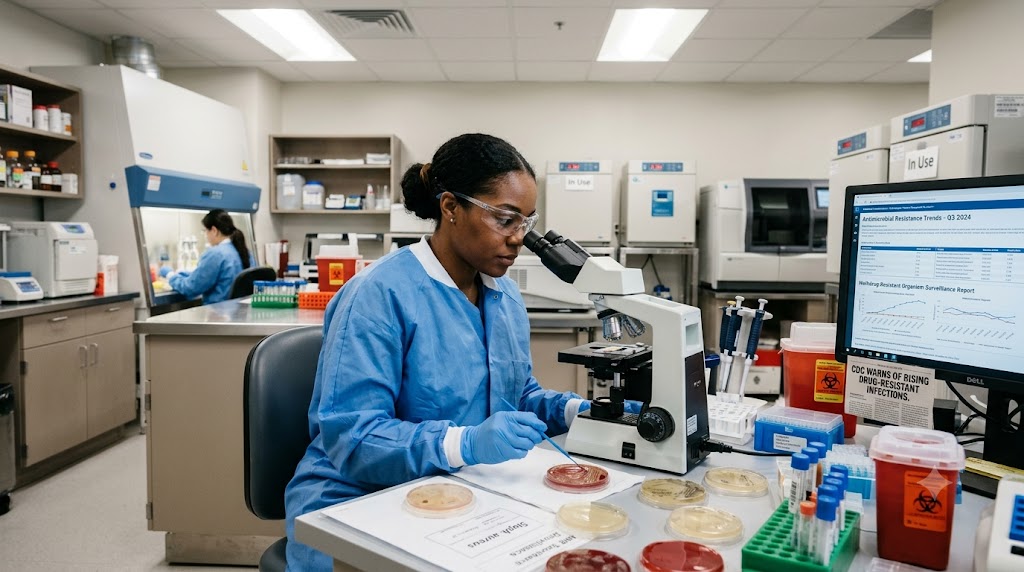
The U.S. Centers for Disease Control and Prevention (CDC) is warning that drug-resistant bacteria and fungi remain a growing public health threat, with an estimated 9.7 million infections and 50,800 deaths each year across the country.
The figures appear in the agency’s updated 2026 Antimicrobial Resistance Threats Report, released October 27. The report identifies 19 drug-resistant pathogens as threats requiring different levels of attention, including four classified as urgent.
Among the most concerning is Candida auris, a drug-resistant fungus that can spread in hospitals and nursing homes and cause serious infections in vulnerable patients. The CDC also highlighted bacteria resistant to powerful antibiotics and drug-resistant gonorrhea.
Antimicrobial resistance can make infections harder to treat, potentially extending hospital stays, increasing healthcare costs and reducing the number of effective medicines available to patients. The CDC estimates that healthcare-associated drug-resistant infections account for more than 42,000 deaths and nearly $12 billion in healthcare costs annually.
The agency said its latest estimates use updated data sources and methods, meaning the overall figures should not be directly compared with all estimates in its 2019 report.
Health experts emphasize the importance of infection prevention and responsible antibiotic use. Antibiotics should be taken only when prescribed by a qualified healthcare professional; they do not treat viral illnesses such as colds and flu.
The new findings highlight the need for stronger infection control, careful use of existing medicines and continued development of effective treatments.

Comments (0)
Sign in to join the conversation.