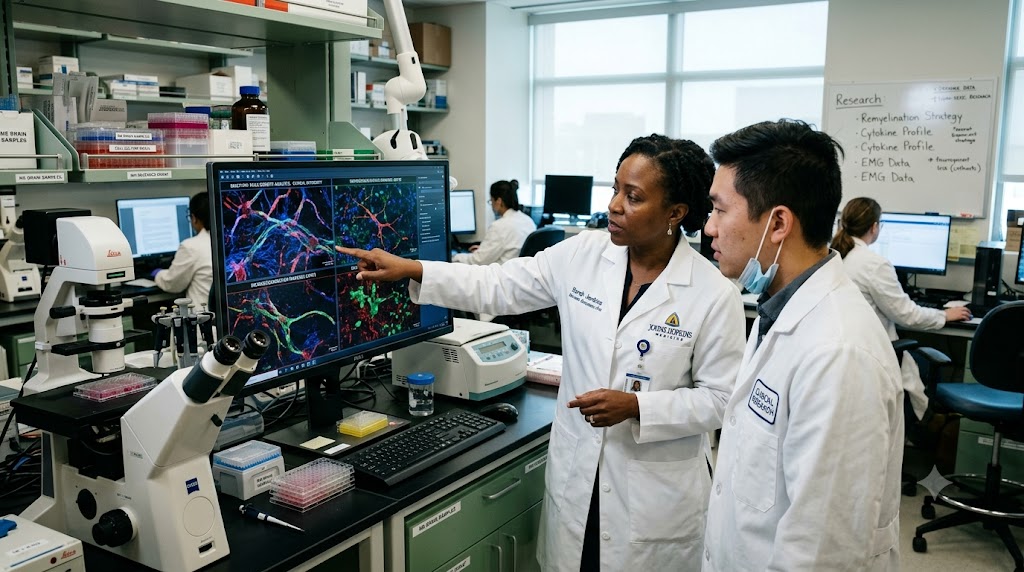
An experimental drug derived from HIV medicines has shown promising results in reversing vision loss and paralysis in animal models of multiple sclerosis (MS), according to new NIH-funded research.
Researchers at the University of Virginia studied kamuvudine-9, or K-9, a modified compound designed to block activation of the inflammasome, a biological system involved in inflammation and cell damage in the brain and spinal cord.
In mice with an MS-like condition, researchers reported that K-9 protected nerve fibers and their myelin coverings and helped animals recover from previously observed motor impairment and vision loss. The study was published in Science Translational Medicine on September 23.
Researchers also examined health-insurance data involving more than 3 million U.S. patients. They found that people receiving certain approved antiviral medicines known as nucleoside reverse transcriptase inhibitors (NRTIs) had lower rates of MS diagnoses and relapses. However, the researchers stressed that these findings do not establish that NRTIs or K-9 prevent or treat MS in humans.
K-9 has previously been studied in clinical trials for eye conditions, and researchers hope to move toward clinical studies for MS and other neurodegenerative diseases. The latest findings are promising but remain experimental and require human clinical testing before conclusions about effectiveness can be made.



Comments (0)
Sign in to join the conversation.