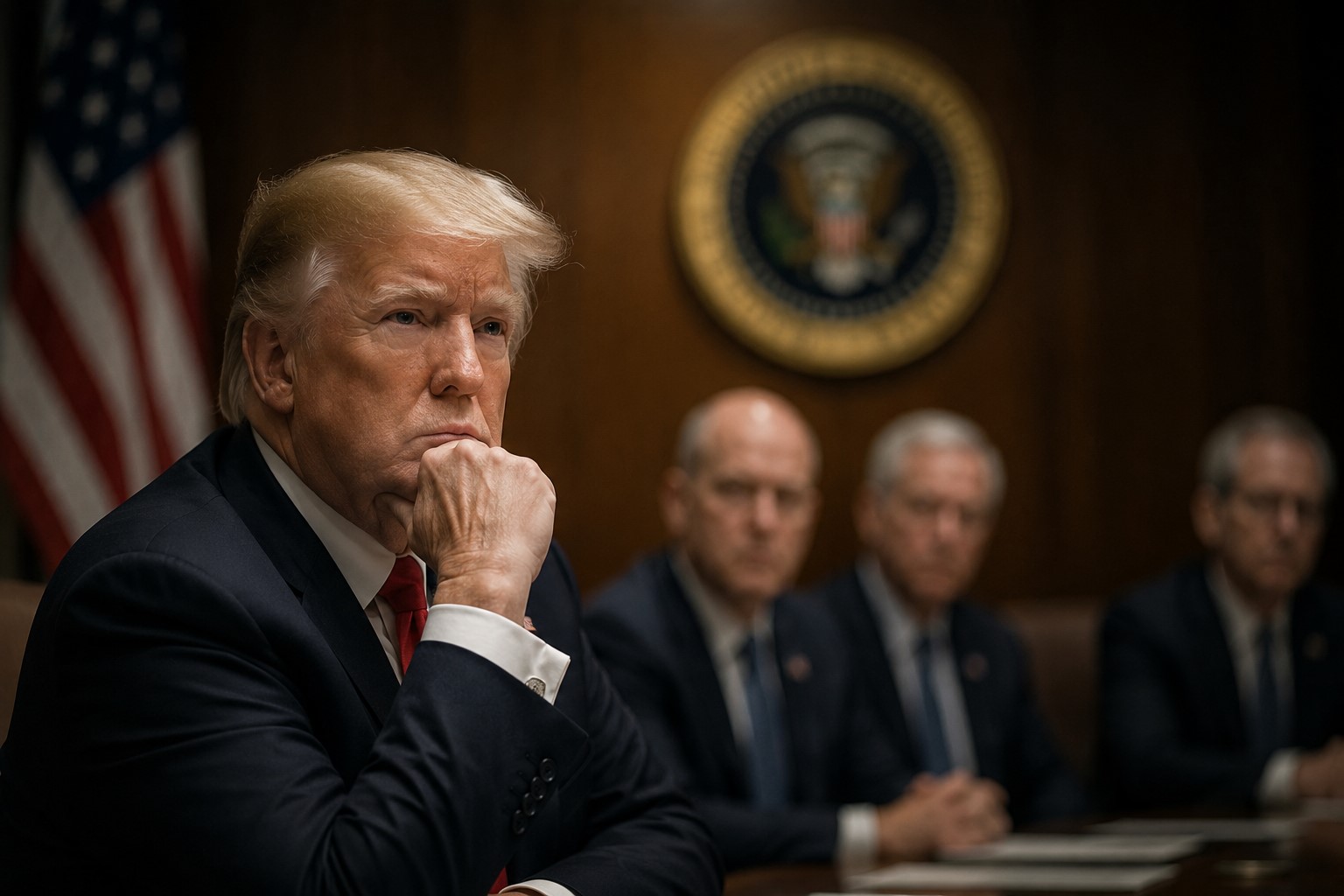
Trump Still Faces an Intelligence Leadership Challenge as New Questions Emerge
President Donald Trump has nominated Jay Clayton to serve as the next Director of National Intelligence (DNI), a move that has drawn a relatively positive reception from lawmakers across party lines. However, the appointment comes amid renewed scrutiny over the administration’s approach to intelligence leadership and national security oversight.
Clayton, currently serving as U.S. Attorney for the Southern District of New York and previously chairman of the Securities and Exchange Commission, is widely viewed as a seasoned government official with extensive regulatory and legal experience. His nomination has been met with less controversy than many recent high-profile appointments within the Trump administration.
Even Democratic lawmakers have offered cautious praise. Senator Mark Warner, the top Democrat on the Senate Intelligence Committee, stated that he has "great respect" for Clayton, signaling the possibility of a smoother confirmation process than expected.
The leadership change follows the announcement that current Director of National Intelligence Tulsi Gabbard will step down later this month, creating a vacancy at the top of the nation’s intelligence apparatus.
While Clayton’s nomination has generated relatively little opposition, concerns have emerged over Trump’s interim leadership plan. Pending Senate confirmation, the president has selected Bill Pulte to serve as acting Director of National Intelligence while continuing his responsibilities as head of the Federal Housing Finance Agency.
The decision has sparked criticism from both Republicans and Democrats, with opponents questioning whether Pulte possesses the experience necessary to oversee the nation’s intelligence agencies and coordinate sensitive national security operations.
Critics argue that the Director of National Intelligence position requires deep expertise in intelligence gathering, threat assessment, and interagency coordination areas that fall outside Pulte’s professional background. Supporters of the administration, however, contend that temporary appointments are common and that the acting role is intended to provide continuity until a permanent director is confirmed.
The controversy highlights a broader challenge that has followed Trump throughout both of his administrations: maintaining stable leadership within the intelligence community while balancing loyalty, expertise, and policy priorities.
As Clayton prepares for a likely Senate confirmation process, questions remain about how the administration will manage intelligence operations during the transition period. The debate also underscores ongoing tensions between the White House and elements of the intelligence community, a relationship that has often been marked by disagreements over national security assessments and institutional independence.
Comments (0)
Sign in to join the conversation.