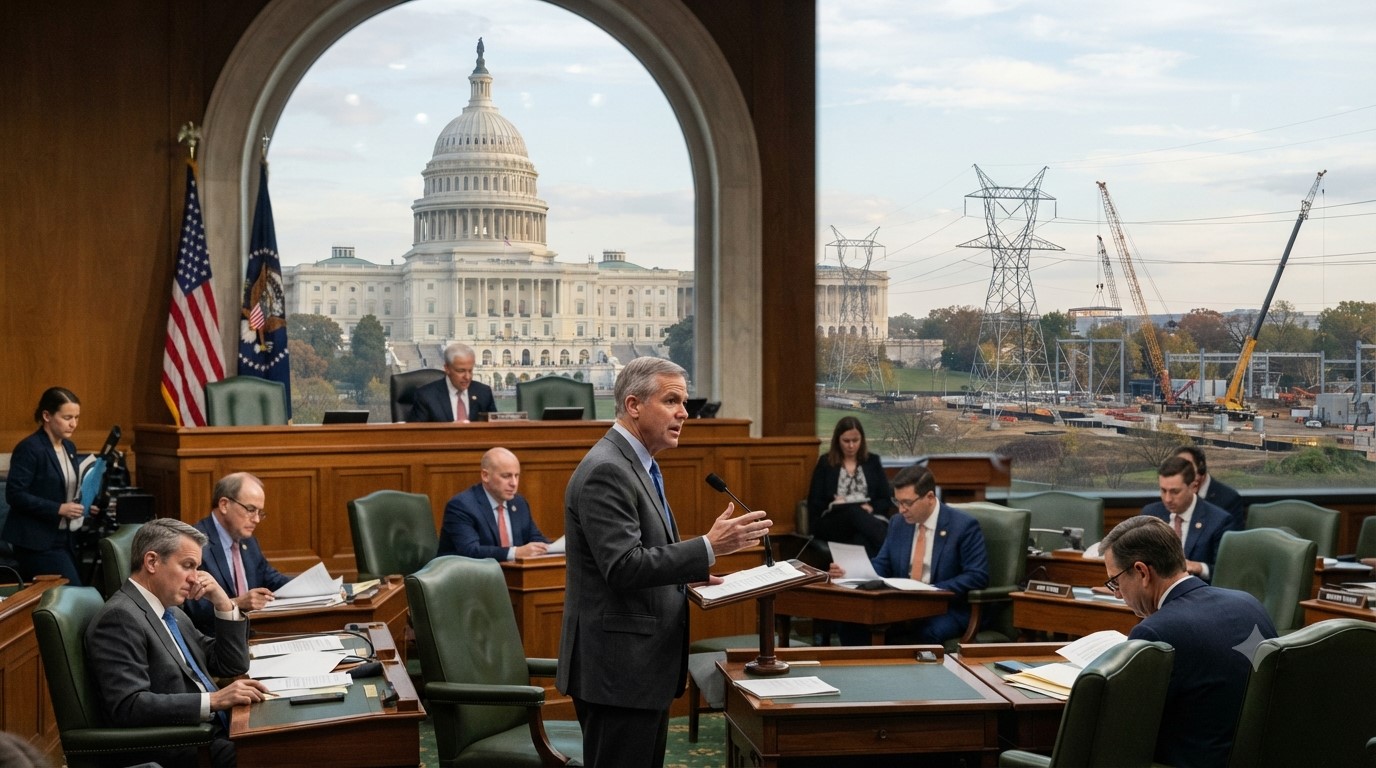
The US Senate has approved a major bipartisan energy permitting reform bill, setting up another political battle in Congress as lawmakers debate America's energy future and environmental protections.
The legislation, known as the Bipartisan American Affordability and Jobs Act of 2026, passed the Senate by a 62–33 vote on November 19. It now moves to the House of Representatives for consideration.
The proposed legislation aims to accelerate federal approval processes for major infrastructure projects, including power plants, electricity transmission lines, renewable energy facilities, pipelines and data centres.
Supporters argue that faster permitting could increase domestic energy production, reduce electricity costs and encourage investment in infrastructure needed to support America's growing energy demand.
However, the proposal has generated opposition from environmental groups and some Democratic lawmakers. Critics warn that changes to federal environmental laws could limit judicial reviews and weaken protections under legislation such as the Clean Water Act and Endangered Species Act.
The political timing is particularly significant. Democrats are preparing to take control of Congress in January 2027 following their strong performance in the midterm elections.
The House debate could become an important test of bipartisan cooperation, particularly as lawmakers face disagreements over energy policy, environmental regulation and the future direction of American infrastructure development.
The final outcome will determine whether the proposed permitting changes become federal law.

Comments (0)
Sign in to join the conversation.