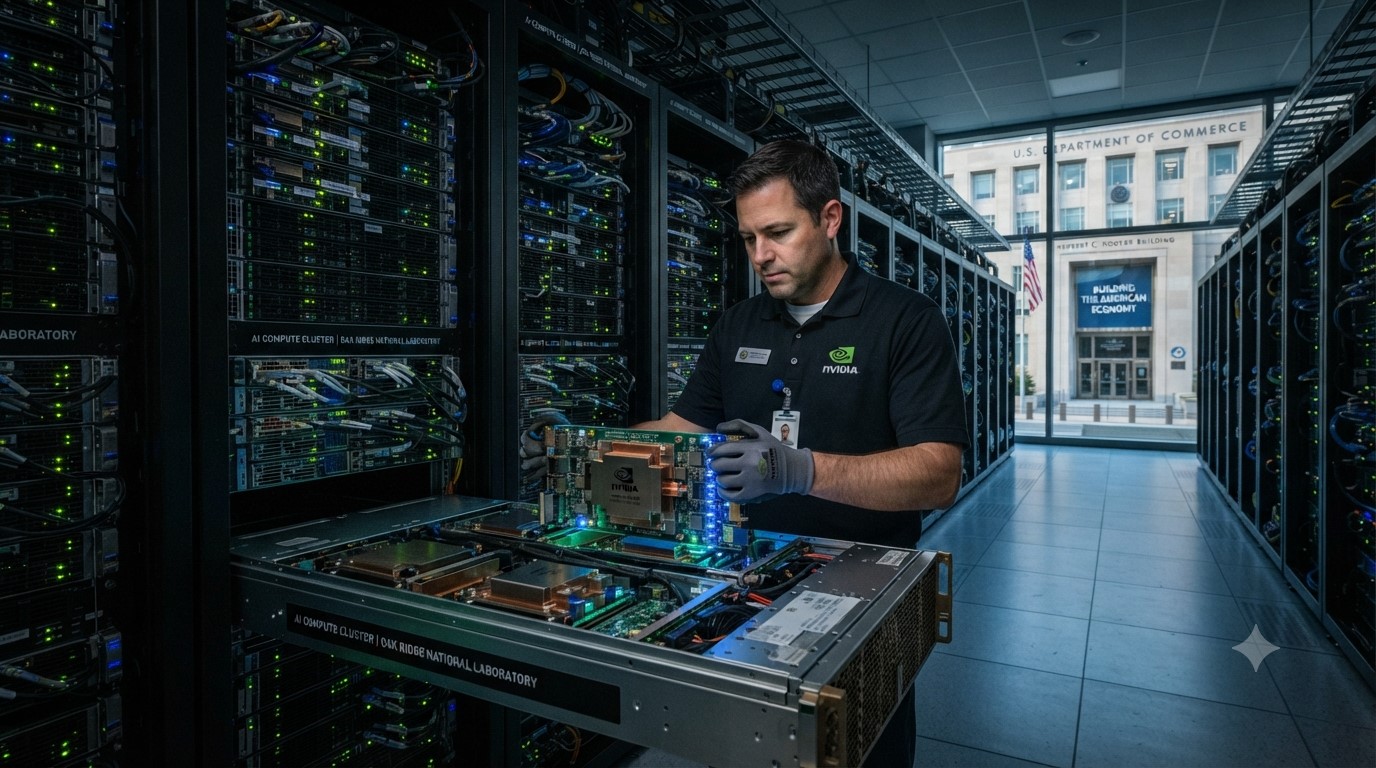
The United States government has introduced new restrictions aimed at preventing Chinese companies from accessing advanced American artificial intelligence chips through overseas data centres.
The new rules, announced by the US Department of Commerce, target third-country computing facilities that could allow restricted Chinese businesses to remotely use powerful AI processors without directly importing them.
Under the policy, overseas data centres supplying significant computing capacity to companies headquartered in countries including China, Russia and Iran will face additional licensing and customer-verification requirements.
The restrictions also introduce new licensing requirements for advanced chip exports to selected countries, including Singapore, Malaysia, Thailand, Indonesia and Brazil.
The move could have major consequences for American semiconductor companies, cloud computing providers and international technology businesses.
Companies such as Nvidia are particularly relevant because their advanced processors are widely used to train artificial intelligence models and operate large-scale data centres.
The new policy highlights Washington's growing focus on protecting America's leadership in artificial intelligence and advanced semiconductor technology. However, it could also create additional challenges for international technology trade and US-China relations.



Comments (0)
Sign in to join the conversation.