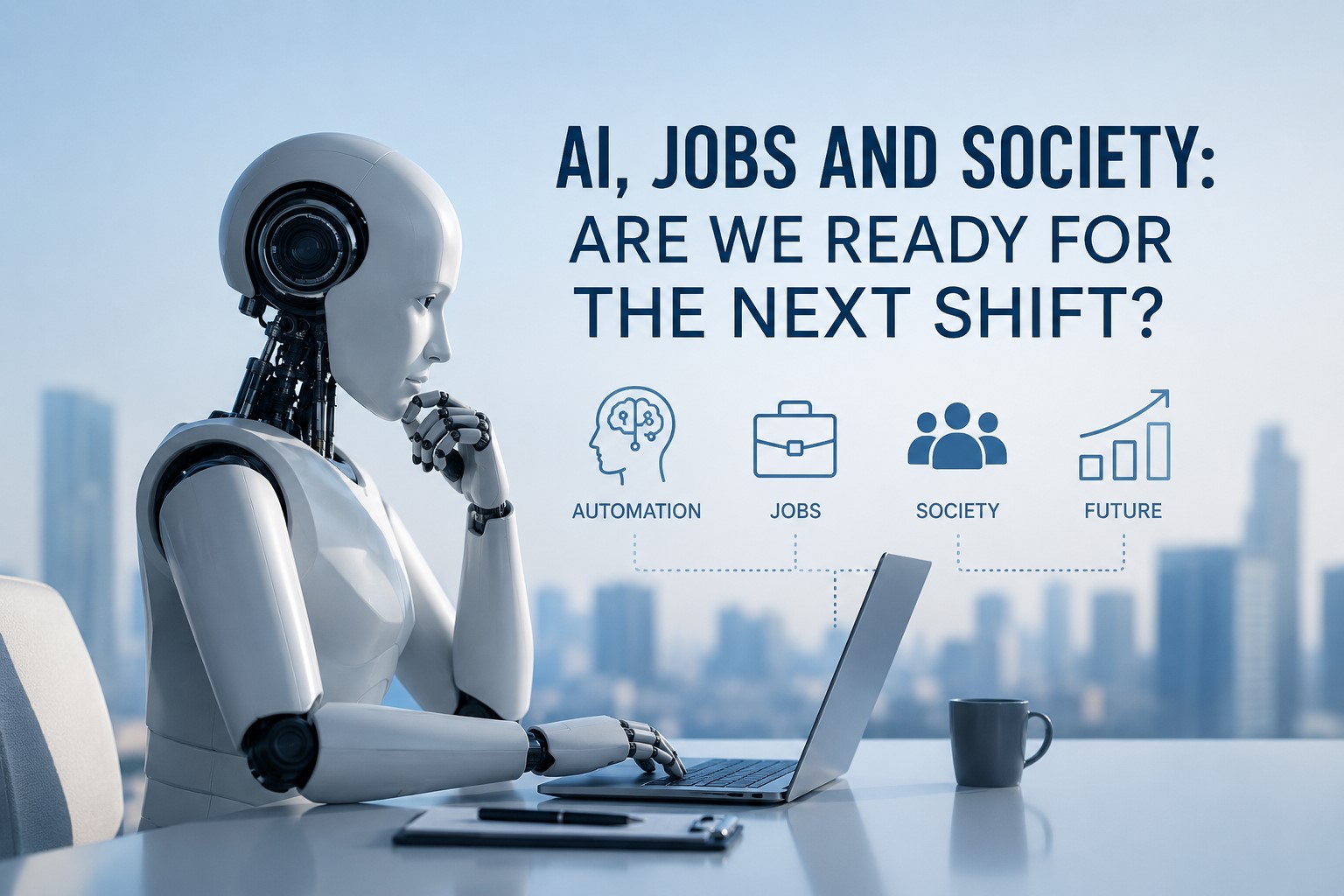
AI, Jobs and Society: Are We Ready for the Next Shift?
Artificial intelligence is no longer a distant concept discussed only in research labs or science fiction. It has become part of daily life helping write emails, generate images, analyze data, and even make decisions once reserved for humans. But as AI rapidly expands into workplaces and public life, one question is becoming harder to ignore: are we truly ready for the changes it will bring?
For workers across industries, the conversation around AI often begins with uncertainty. Automation has already transformed manufacturing and logistics, but newer forms of AI are now entering offices, classrooms, media organizations, healthcare systems, and creative industries. Tasks once considered safe from automation writing, coding, customer service, design, and analysis are increasingly being assisted or partially replaced by intelligent systems.
Supporters argue that AI will create opportunities rather than simply eliminate jobs. History offers examples where technological revolutions produced entirely new industries and roles. AI engineers, prompt specialists, ethics researchers, and automation consultants are among the careers that barely existed a few years ago. Productivity gains could also allow businesses to expand, creating employment in unexpected areas.
Yet optimism alone cannot solve the challenges ahead. The transition period may be painful for millions of workers whose skills no longer match market demands. Without strong investment in education and retraining, technological progress risks widening inequality rather than reducing it.
Education systems face growing pressure to adapt. Schools and universities still largely prepare students for traditional career paths, while employers increasingly seek digital literacy, adaptability, and problem-solving skills. Lifelong learning may no longer be optional it may become essential for career survival.


Comments (0)
Sign in to join the conversation.