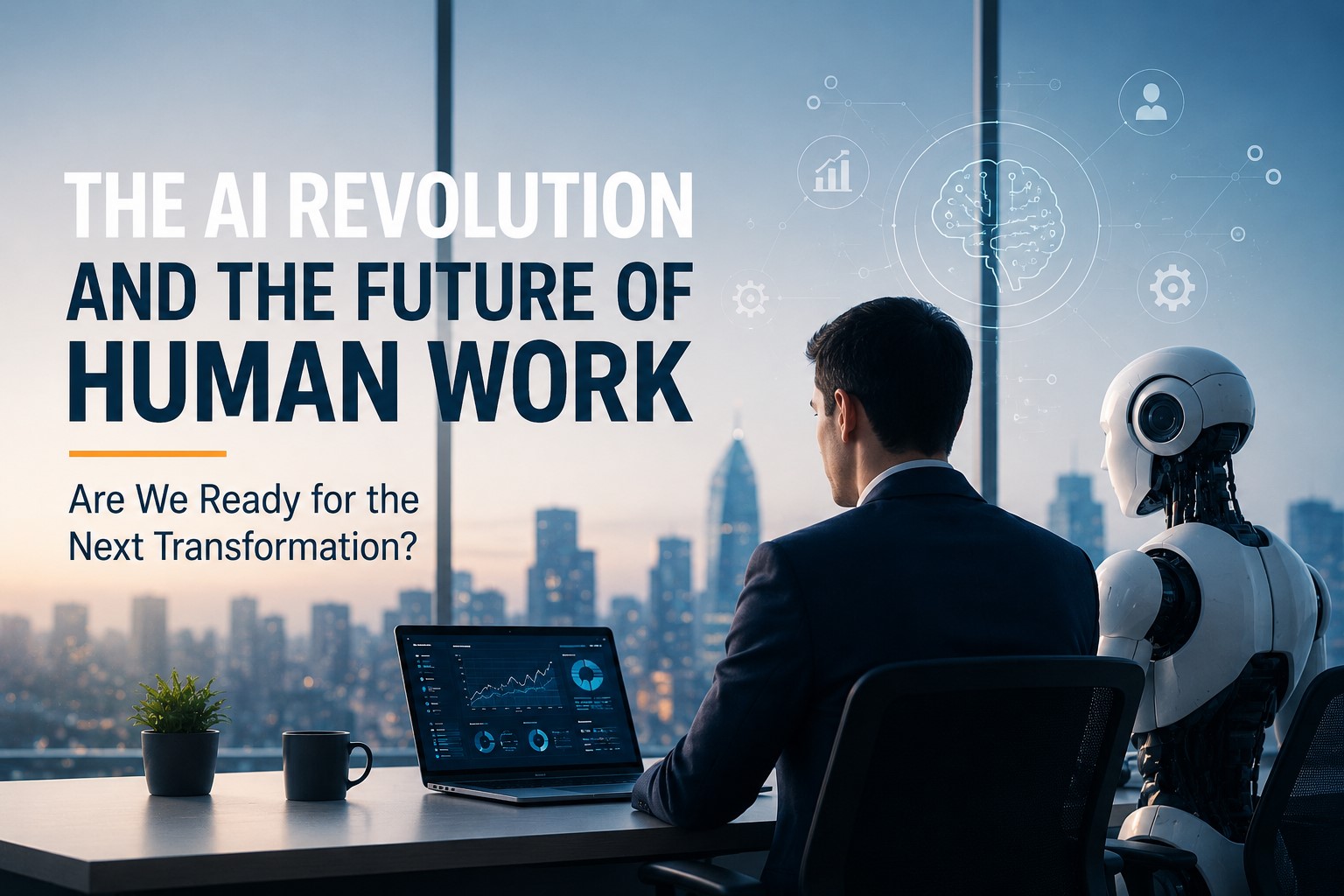
The AI Revolution and the Future of Human Work: Are We Ready for the Next Transformation?
Artificial intelligence is no longer a futuristic concept confined to science fiction. It is rapidly becoming a defining force of the modern economy, transforming industries, reshaping workplaces, and changing how people interact with technology. From automated customer service systems to advanced data analysis and content creation tools, AI is already influencing millions of jobs worldwide.
The speed of this transformation has sparked both excitement and concern. Supporters argue that AI has the potential to increase productivity, accelerate innovation, and create entirely new industries. Critics, however, warn that automation could displace workers, widen economic inequality, and leave many people struggling to adapt to changing labor market demands.
History suggests that technological revolutions often create more opportunities than they eliminate. The Industrial Revolution transformed manufacturing, while the internet revolution reshaped communication, commerce, and entertainment. Yet each transition came with disruption, requiring workers and institutions to develop new skills and adapt to new realities.
The AI revolution presents a similar challenge. Routine and repetitive tasks are increasingly being automated, affecting sectors ranging from manufacturing and logistics to finance and customer support. At the same time, demand is growing for skills related to data analysis, cybersecurity, software development, AI oversight, and creative problem-solving.
Education systems around the world face mounting pressure to prepare students for careers that may not yet exist. Traditional models focused on memorization are giving way to a greater emphasis on adaptability, digital literacy, critical thinking, and lifelong learning. Workers of all ages may need to continuously update their skills throughout their careers to remain competitive.
Businesses also have a responsibility to manage this transition carefully. Rather than viewing AI solely as a replacement for human labor, organizations should explore how technology can enhance human capabilities. The most successful workplaces of the future are likely to combine the efficiency of AI with uniquely human strengths such as creativity, emotional intelligence, ethical judgment, and leadership.


Comments (0)
Sign in to join the conversation.