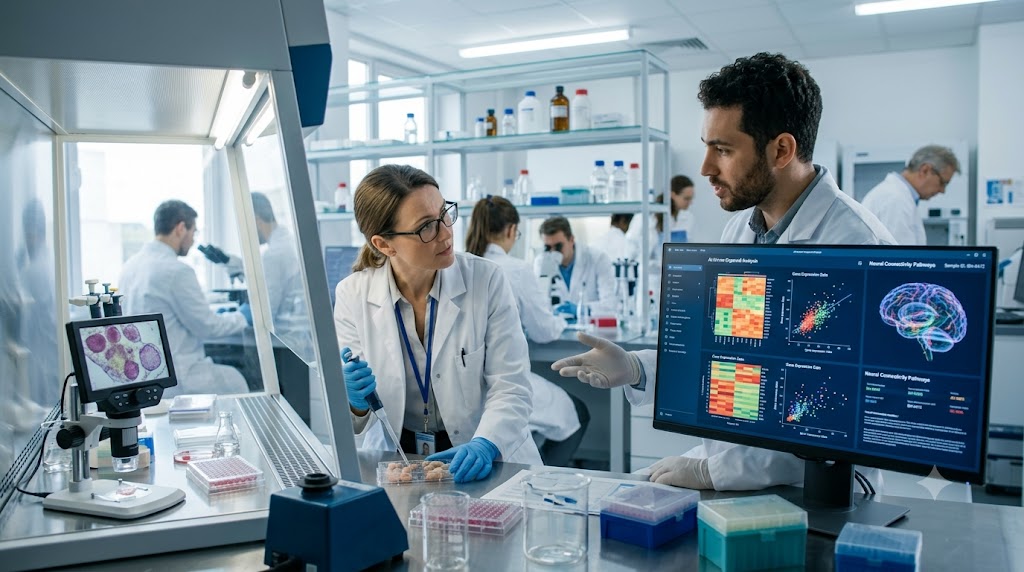
Federal health agencies are increasing the use of organoids, tissue models, artificial intelligence and computational research methods.
WASHINGTON — September 23, 2026 — The U.S. Department of Health and Human Services has announced a new series of actions aimed at expanding human-based biomedical research and reducing unnecessary reliance on animal testing.
HHS said the initiative includes greater use of technologies such as human organoids, tissue models, artificial intelligence and computational modeling across federal biomedical research programs. The department said more than 20 initiatives have been launched since Secretary Robert F. Kennedy Jr. took office.
The changes are intended to modernize how federal agencies conduct, fund and evaluate medical research. HHS said human-based approaches could provide researchers with additional tools for studying diseases and evaluating potential treatments.
The initiative could affect research institutions, pharmaceutical developers and other organizations that rely on federal biomedical research funding and regulatory processes.
HHS described the move as part of a broader effort to place human biology at the center of biomedical research while reducing animal testing where alternative methods are available.
The announcement adds to the growing role of AI and advanced laboratory technologies in U.S. healthcare research, as federal agencies and researchers explore new approaches to drug development and disease studies.
Comments (0)
Sign in to join the conversation.