Since President Trump’s return to the White House in November 2024 marked by a decisive victory across all seven swing states and a popular vote win the American political landscape has entered a new phase of realignment. The Democratic Party, in response, has faced growing internal divisions, with tensions emerging between its progressive and more centrist wings. Recent election outcomes and candidate selections in key states such as New York, Virginia, and Maine have further intensified debate over the party’s ideological direction heading into 2028.
As Democrats grapple with internal disagreements, attention is increasingly turning to the Republican Party’s future once the Trump era transitions into its next stage. Vice President J.D. Vance is widely viewed as the early frontrunner for the GOP’s 2028 presidential nomination. However, history suggests that sitting vice presidents do not always receive an uncontested path to the nomination, often facing primary challenges even when they are the presumed successor.
Past elections offer several examples. George H.W. Bush faced competition from Senator Bob Dole in 1988. Walter Mondale overcame Senator Gary Hart in 1984, and Al Gore faced Senator Bill Bradley in 2000. These contests highlight a broader pattern: contested primaries often serve as defining moments for political parties, rather than predetermined coronations.
Even if Vice President Vance enters the race with an endorsement from President Trump, the 2028 Republican primary is expected to be competitive. Early speculation points to a wide field of potential challengers, including Florida Governor Ron DeSantis, Georgia Governor Brian Kemp, and former Virginia Governor Glenn Youngkin. Former Secretary of State Mike Pompeo is also seen as a possible contender, alongside prominent senators such as Ted Cruz and David McCormick. Cabinet officials like Marco Rubio and Doug Burgum may also emerge as late entrants.
This potential lineup suggests a crowded and ideologically diverse Republican primary field. While President Trump’s influence over the party remains significant, it is unclear whether his endorsement alone will determine the outcome or whether Republican voters will seek a candidate who represents continuity, adaptation, or a partial departure from the Trump-era agenda.
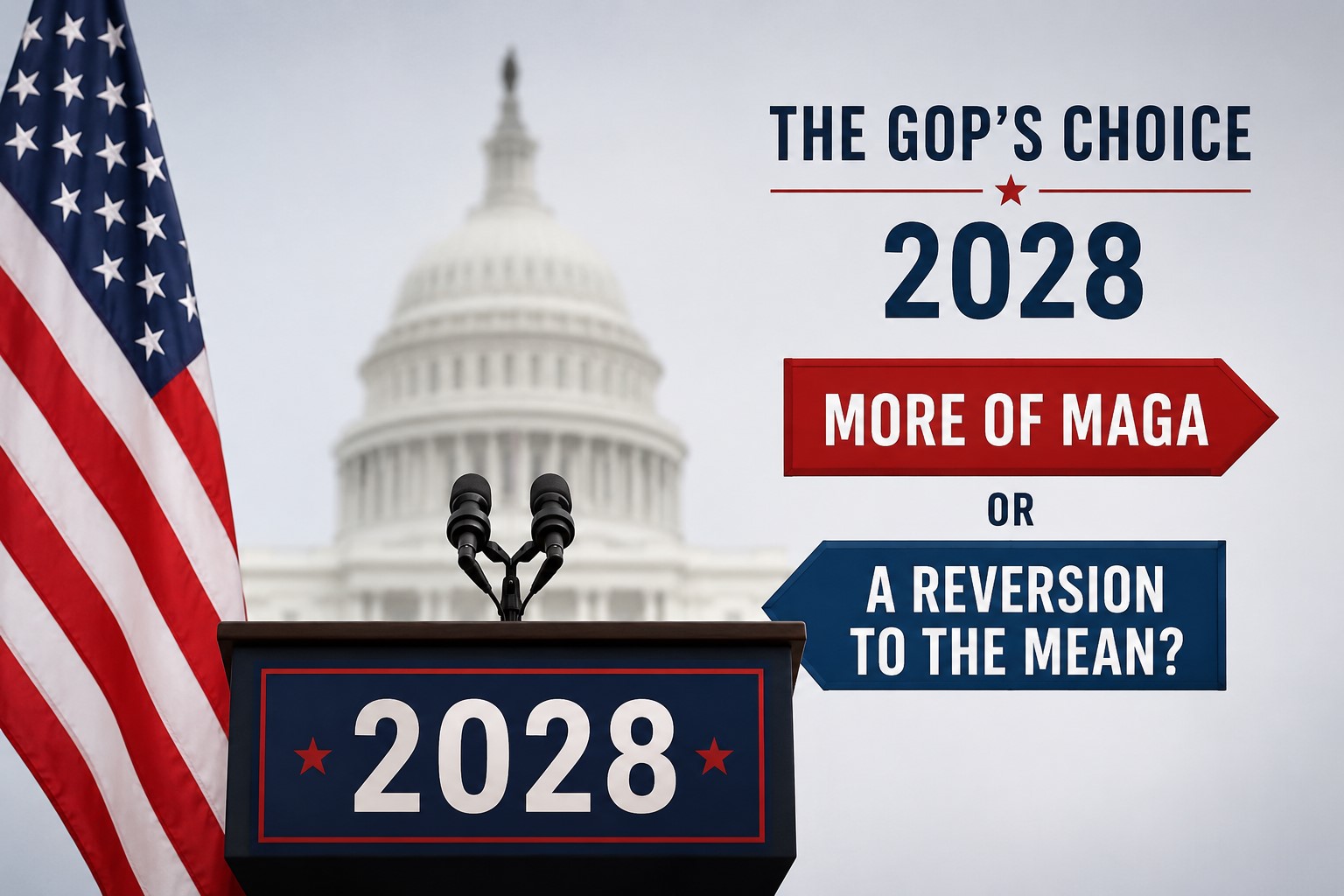
As the 2028 race approaches, the central question for Republicans becomes increasingly clear: will the party continue to fully embrace the MAGA movement, or will it shift toward a more traditional conservative posture that broadens its electoral appeal? The answer will likely shape the GOP’s identity well beyond the next election cycle.

Comments (0)
Sign in to join the conversation.