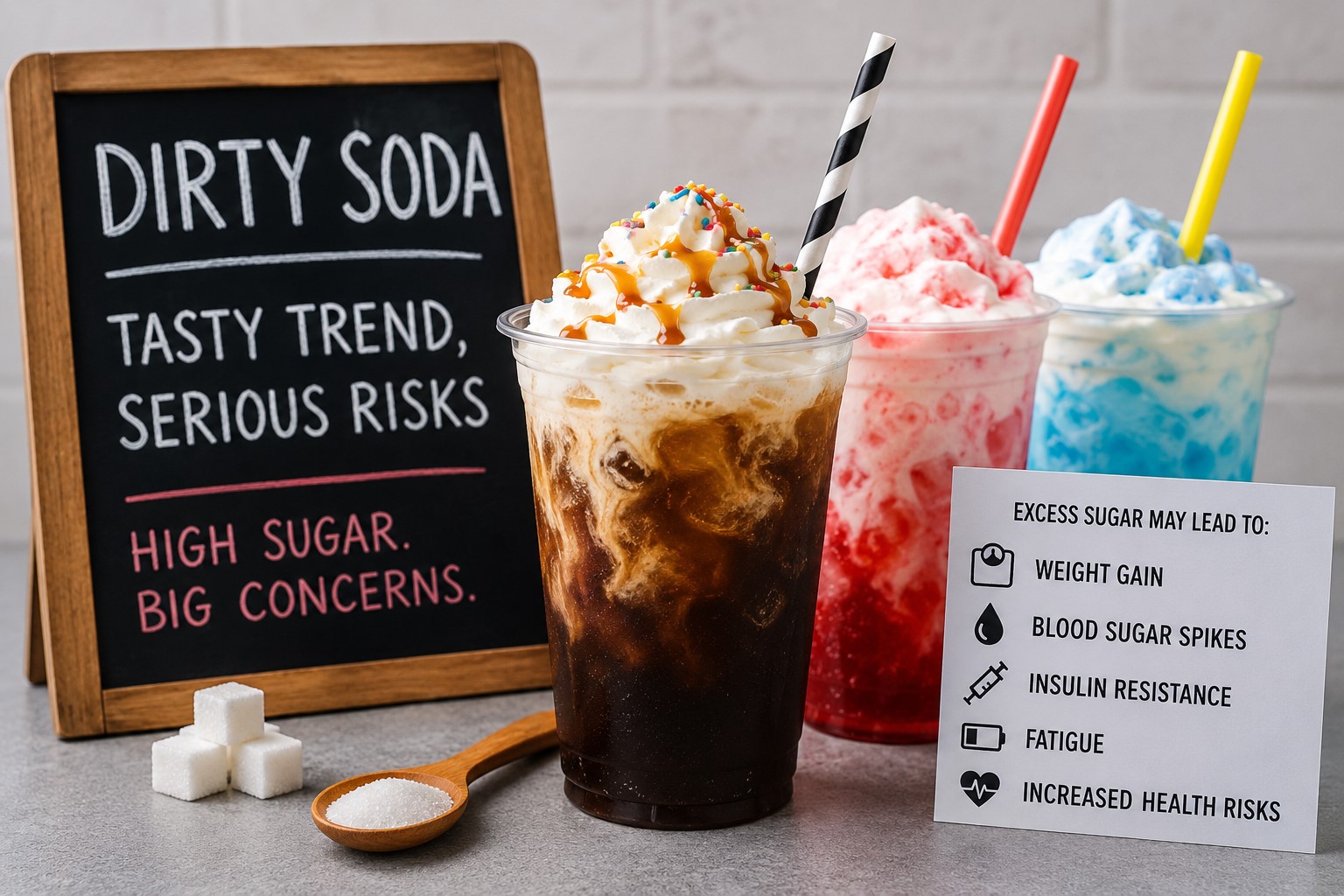
Dirty Soda Craze Sparks Health Concerns as Experts Warn of Excess Sugar and Metabolic Risks
A growing beverage trend known as the "dirty soda" is attracting consumers across the United States, but health experts are cautioning that these highly customized drinks may come with significant health risks.
Dirty sodas are typically made by combining a traditional soft drink with flavored syrups, creamers, fruit juices, and other sweet toppings. The result is a rich, dessert-like beverage that blends elements of soda, mocktails, and milkshakes into a single drink.
Nutrition experts warn that these drinks can contain between 250 and 400 calories and as much as 55 to 70 grams of sugar per serving. According to registered dietitian Erin Palinski-Wade, that amount often exceeds the American Heart Association’s recommended daily limit for added sugar.
While some consumers opt for diet soda as the base, health professionals note that the added syrups and creamers can still create a high-calorie, high-sugar beverage. Palinski-Wade described dirty sodas as being closer to a dessert than a traditional soft drink.
The health concerns are particularly serious for individuals with insulin resistance, prediabetes, or diabetes. Experts say the combination of rapidly absorbed sugars and creamy ingredients can trigger sharp spikes and drops in blood sugar levels, potentially increasing hunger, fatigue, and insulin demand.
The trend is believed to have originated in Utah, where specialty soda shops gained popularity as an alternative to coffee and alcoholic beverages. One of the most recognized brands associated with the movement is Swig, a Utah-based company founded in 2010. Over time, social media platforms and television programs helped introduce dirty sodas to a wider audience.
Today, the trend has gone mainstream. Major beverage and fast-food companies have launched their own versions, with products inspired by the soda-and-cream combination appearing in restaurants and grocery stores nationwide. Chains such as McDonald’s, Taco Bell, Sonic, and Dunkin have also embraced customizable beverage options that resemble the dirty soda concept.
The trend recently drew criticism after bakery chain Crumbl introduced a dirty soda featuring multiple sweet ingredients layered on top of a sugary soda base. Functional medicine physician Dr. Mark Hyman publicly criticized the drink, claiming it contained approximately 186 grams of sugar an amount he compared to consuming 19 doughnuts. He described the product as a "metabolic disaster" and called for greater awareness of the health impacts of excessive sugar consumption.
As dirty sodas continue to gain popularity, nutrition experts encourage consumers to pay close attention to ingredient lists and sugar content, particularly when consuming these beverages regularly.


Comments (0)
Sign in to join the conversation.