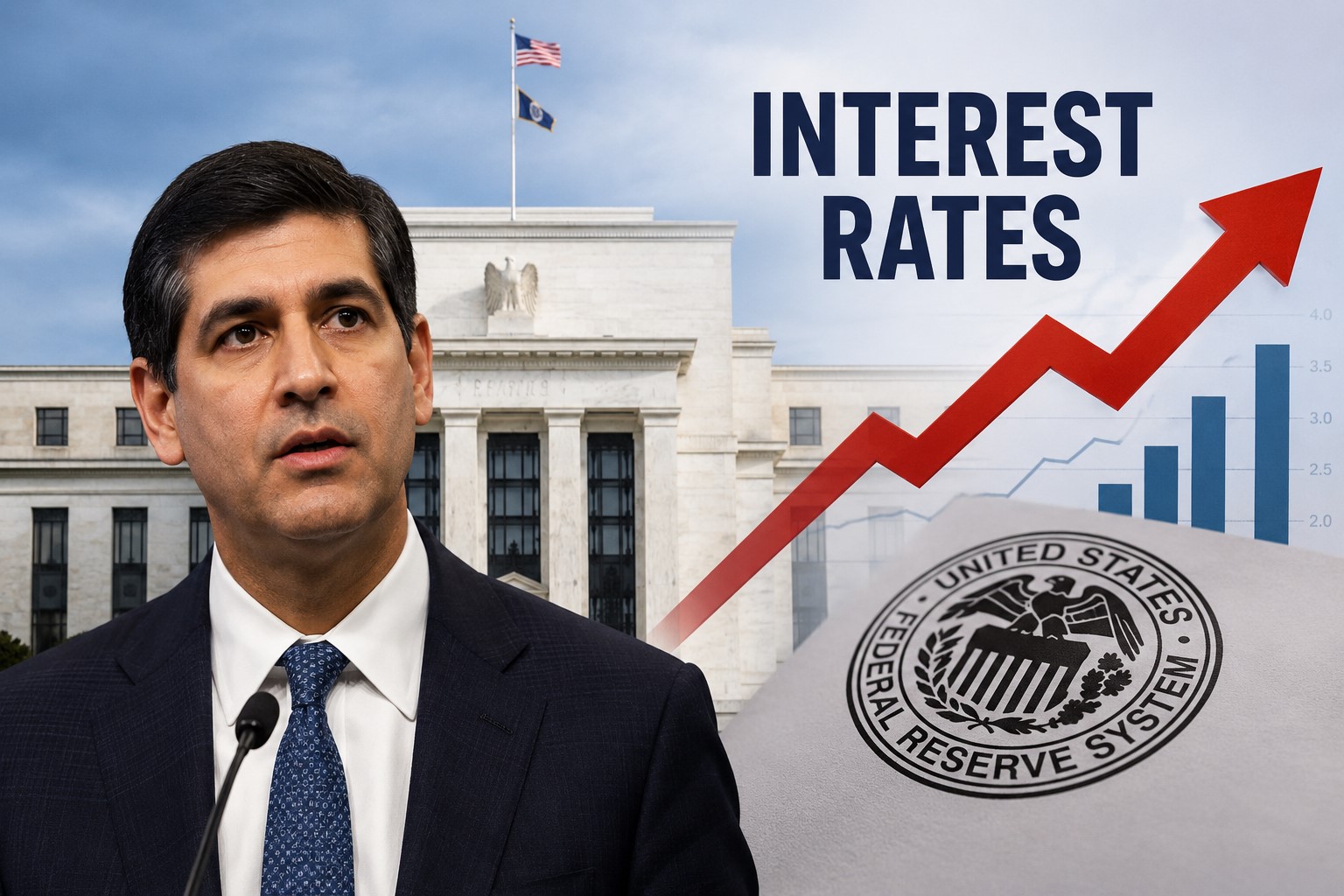
Rising Inflation Could Force Trump’s New Fed Chair to Consider Interest Rate Hikes
Just weeks into his tenure as Federal Reserve chair, Kevin Warsh is facing a challenging economic environment that could test both his leadership and the central bank’s independence.
A recent inflation report showed consumer prices rising above 4% annually for the first time in three years, signaling that inflationary pressures may be returning. The data arrives ahead of Warsh’s first regularly scheduled Federal Reserve policy meeting and follows a stronger-than-expected jobs report, indicating continued resilience in the labor market.
The combination of persistent inflation and solid employment growth presents a difficult dilemma for the Federal Reserve. While President Donald Trump has consistently advocated for lower interest rates to support economic growth, the Fed’s mandate requires policymakers to focus on price stability and maximum employment, regardless of political preferences.
Economists say that if inflation remains elevated, the Federal Reserve may ultimately need to raise interest rates rather than cut them. Higher rates increase borrowing costs for consumers and businesses, helping to slow demand and reduce inflationary pressures across the economy.
David Wilcox, an economist with Bloomberg Economics and the Peterson Institute for International Economics, noted that one of the earliest tests of Warsh’s leadership will be whether he follows through on the rate cuts many expected under the Trump administration or responds to changing economic conditions.
Financial markets widely expect the Fed to keep interest rates unchanged at its upcoming meeting. However, investor expectations have increasingly shifted toward the possibility of rate hikes later in the year if inflation continues to accelerate.
The Federal Reserve’s benchmark interest rate plays a critical role in the economy, influencing borrowing costs for mortgages, auto loans, credit cards, and business financing. Although the Fed does not directly set consumer lending rates, its policy decisions significantly impact financial markets and credit conditions.
Analysts are also closely watching how Warsh communicates future policy decisions. Some observers believe he may move away from providing strong forward guidance about future rate cuts, giving the central bank greater flexibility as economic conditions evolve.



Comments (0)
Sign in to join the conversation.