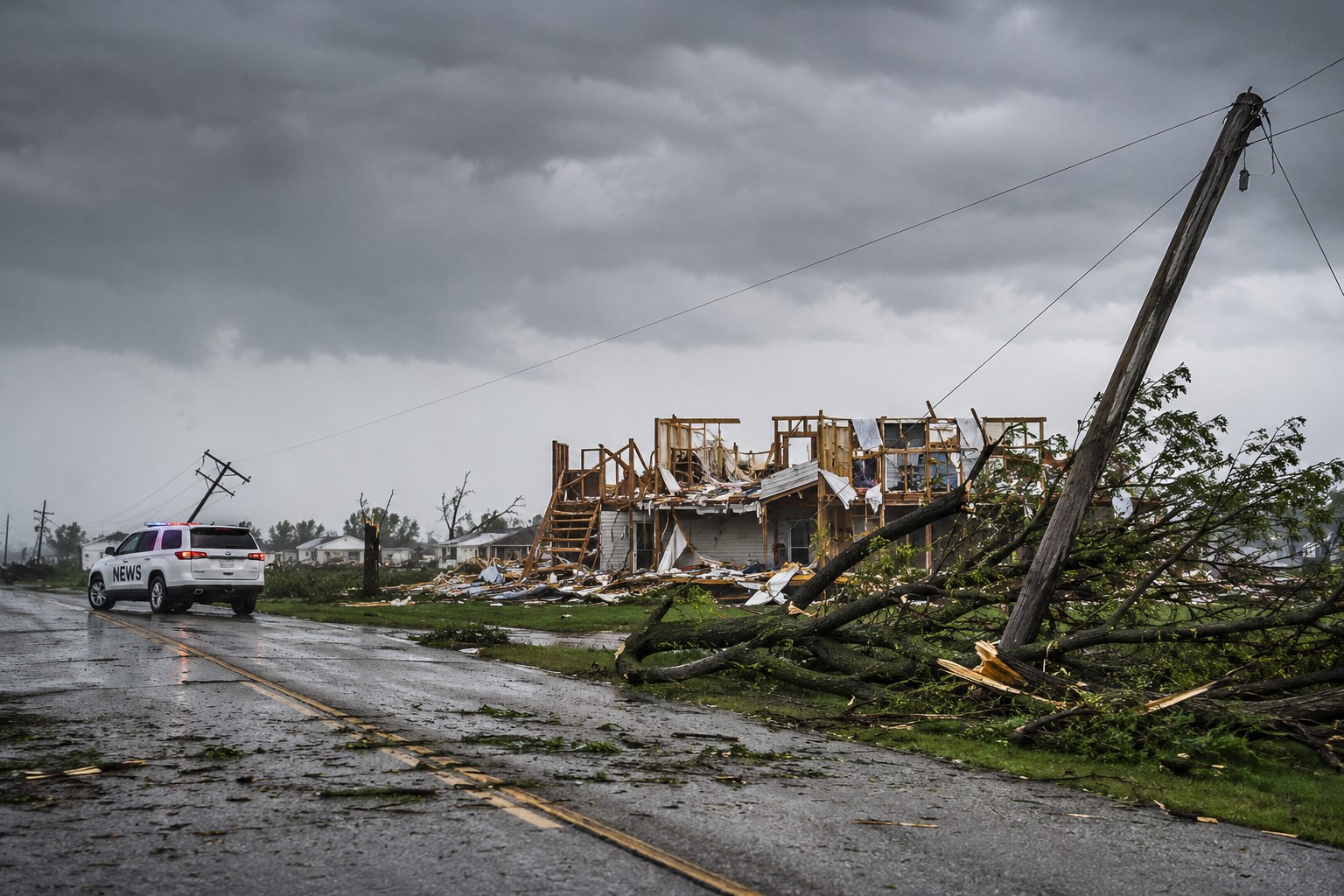
Deadly Storms and Suspected Tornadoes Tear Through Midwest, Leaving One Dead in Iowa and Causing Widespread Damage
Severe storms and suspected tornadoes swept across the U.S. Midwest this week, leaving widespread destruction, knocking out power to hundreds of thousands of residents, and resulting in at least one confirmed death in Iowa. The powerful weather system also disrupted travel, damaged infrastructure, and triggered multiple tornado warnings across several states.
In Illinois and Wisconsin, officials reported approximately 11 tornado sightings by Thursday evening, with some of the most significant activity occurring near the Chicago area. Wind gusts reached up to 75 mph in Mason City and around 70 mph in Morton and Washington, Illinois, as storms tore through communities, downing trees and power lines.
Utility tracking data showed more than 243,000 customers without electricity across Illinois alone, as emergency crews worked to restore power amid ongoing hazardous conditions. The National Weather Service’s Storm Prediction Center raised the Chicago region to a level 4 out of 5 severe weather risk, indicating a high likelihood of widespread damaging storms.
Tornadoes were confirmed in rural areas southwest of Chicago, with preliminary reports of structural damage in places such as Streator, a small manufacturing and farming city. Local officials reported damage to buildings but confirmed no fatalities in the area as assessments continued.
In Iowa, a 54-year-old man died in Des Moines after being struck by a falling tree during strong storms while staying at a homeless encampment. Authorities said he was discovered critically injured and later pronounced dead at the scene.
Elsewhere, storm chasers and residents described harrowing rescues and near-misses as tornadoes tore through communities in Illinois and Missouri. In Streator, one witness helped rescue a man trapped in rubble after a tornado struck, while other families recounted narrowly escaping destruction as mobile homes and buildings were leveled.
The storm system also disrupted air travel across major hubs, including Chicago’s O’Hare and Midway airports as well as airports in Philadelphia and Newark, with hundreds of flights delayed or canceled. Severe weather alerts remained in effect across parts of Illinois, Indiana, Iowa, Missouri, and Wisconsin as the system moved eastward.
Meanwhile, the same weather pattern brought intense heat and humidity to the U.S. East Coast, with authorities warning of potentially record-breaking temperatures and dangerous heat indices in several cities. Officials urged residents to take precautions as extreme weather conditions persisted across multiple regions.



Comments (0)
Sign in to join the conversation.