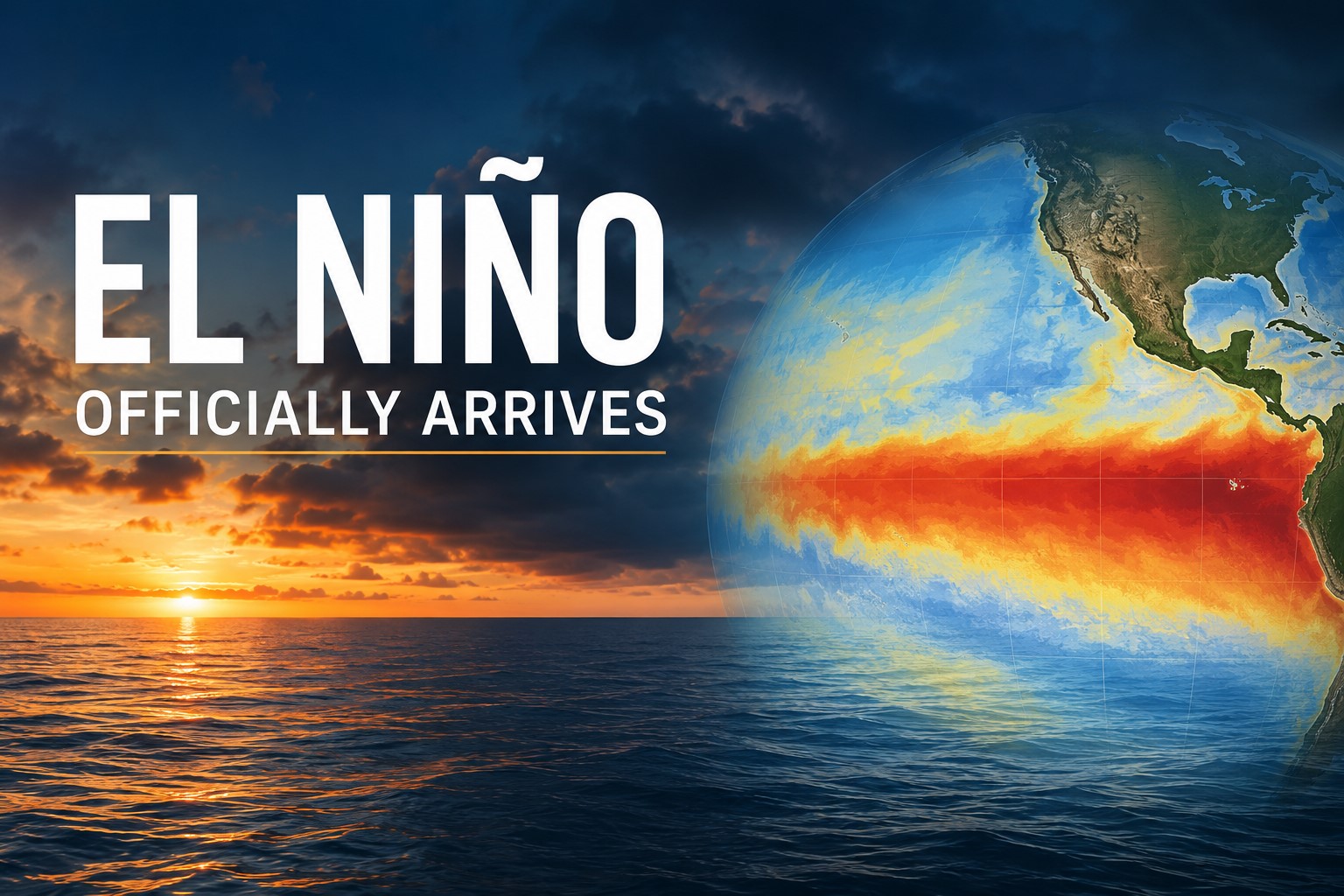
El Niño has officially developed, and forecasters are warning that the current event could be among the strongest in recent history. According to models from the U.S. National Weather Service (NWS), there is a 63% chance that a very strong El Niño will emerge between November and January, potentially placing it alongside some of the most significant events on record.
Meteorologists note that unusually warm ocean temperatures in the tropical Pacific are already becoming established. Ariel Cohen, a meteorologist with the NWS in Los Angeles, said that current conditions suggest a powerful setup may be unfolding. He added that the warming signals are already clearly visible across the region.
El Niño is a naturally occurring climate pattern characterized by warmer-than-average sea surface temperatures in the central and eastern tropical Pacific Ocean. While it is a natural cycle, it also amplifies the effects of human-driven climate change by contributing to higher global average temperatures.
One of the most notable global impacts of El Niño is its influence on weather systems through changes in the jet stream. In the United States, the effects are typically most pronounced during winter months, when the jet stream shifts southward and alters rainfall and temperature patterns.
For the Pacific Northwest, this often means warmer and drier winters, which raises concerns this year as the region is already facing drought conditions and limited snowpack. In contrast, the southern United States usually experiences wetter-than-normal winters, increasing the risk of flooding in some areas.
El Niño conditions also affect hurricane activity, generally suppressing storms in the Atlantic while increasing activity in the Pacific.
Beyond weather, the phenomenon significantly impacts ocean ecosystems. Marine heat waves can intensify under El Niño conditions, disrupting marine life and causing major ecological shifts. Researchers from NOAA’s Southwest Fisheries Science Center report that two marine heat waves are already affecting parts of the Pacific—one near the California coast and another farther offshore.
Although these events are not directly caused by El Niño, scientists expect the pattern to further elevate ocean temperatures in the coming months, potentially extending and intensifying heat stress in marine environments.
Extended marine heat waves can reduce plankton populations at the base of the food chain, trigger harmful algal blooms that produce toxins, and increase marine animal strandings. Species such as whales may move closer to shore, raising the risk of entanglement with fishing gear and boat traffic.
However, some species tend to benefit from warmer waters. Jellyfish populations often increase, and certain fish species experience higher survival rates in early life stages.
Scientists also point to the 2015–2016 marine heat wave known as “The Blob,” which caused widespread ecological disruption along the U.S. West Coast, including fishery closures and significant marine wildlife die-offs. While current forecasts are not expected to reach that extreme level, researchers are closely monitoring conditions.
Warmer ocean temperatures can also bring unusual marine species closer to shore. Past El Niño events have been associated with sightings of yellowfin tuna, mahi-mahi, sea snakes, seahorses, and even whale sharks along the U.S. West Coast. Shark activity has also been known to increase in warmer coastal waters.


Comments (0)
Sign in to join the conversation.